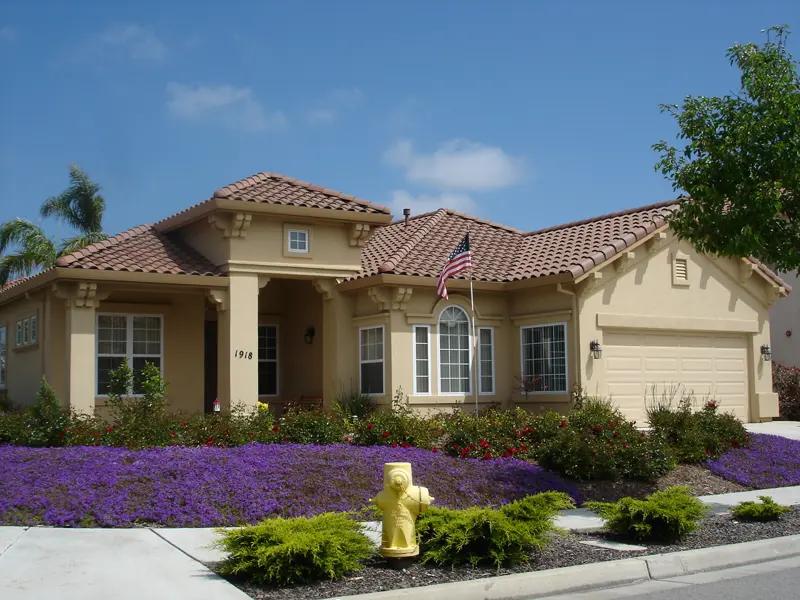
Spring storms
Flash flooding and saturated soil can trigger sudden settlement.
Gruene, New Braunfels
Old Gruene homes ask for a lighter touch than most New Braunfels foundations. The historic houses in Gruene date from a period of significance that runs from 1850 to 1924, and the clay under them shrinks and swells sharply over shallow limestone. National Register listing does not restrict what a private owner does, and Gruene is not among the city's local historic districts, but a locally designated landmark needs city approval before foundation work. On these homes we stabilize first, re-support gently and keep original materials in place.
The Gruene Historic District was listed in the National Register of Historic Places on April 21, 1975. The National Park Service record covers buildings on both sides of Seguin, New Braunfels and Austin Streets, a mix of Late Victorian houses and mid-19th century German colonial buildings with Victorian additions, with a period of significance from 1850 to 1924. Gruene now lies inside the New Braunfels city limits.
The town's own history lays out the building story. German farmers settled the area in the mid 1840s. Henry D. Gruene later built a Victorian cottage, a large brick home and a frame house for his farm foreman, along with the 1878 mercantile and a river-powered cotton gin.
His death in 1920 and the loss of the original gin to fire in 1922 marked the end of the town's boom. When an architecture student working with the Texas Historical Commission looked around in 1974, he found many late 1800s and early 1900s buildings still standing.
USDA soil maps show how demanding this ground is. At the river end of the historic core, near the old gin, the mapped soil is Purves clay on 1 to 5 percent slopes, with hard bedrock at a typical depth of about 19 inches and a linear extensibility rating near 9 percent, which is high shrink-swell.
A few hundred yards north, the map unit is Anhalt clay on 1 to 3 percent slopes, with soft bedrock at about 29 inches and a linear extensibility near 16 percent, which falls in the very high class.
In practice, that means a thin layer of very active clay sitting on rock. The clay shrinks away from footings in a dry summer and swells back in a wet fall, while the rock under it does not move at all. Houses that span a change in clay depth tend to rack, because one corner rides the moving clay while another sits nearly on rock.
Our guide to limestone versus clay foundations explains that pattern in more detail.
Field note
Raised wood floors, if your house has them, show movement first. Floors dip toward the middle of a room where an interior support has settled, or toward an outside wall where the perimeter footing has dropped. Doors drift out of square, tall windows stick, and plaster or old board walls crack at the corners of openings.
Additions add their own stress. A kitchen, bath or porch added decades after the original house often sits on a different kind of support, and the seam between old and new is where cracks open and roofs leak. Brick or stone skirting can hide rotted sills and wet soil underneath, so we look before we promise anything.
Our foundation inspection records elevations room by room so later changes can be measured.
The National Park Service states that National Register listing places no restrictions on what a non-federal owner does with a property unless a project involves federal funding, licensing or permits. Listing in 1975 did not by itself create local design review for Gruene.
The City of New Braunfels runs its own program. Its Historic Preservation division reviews exterior changes to locally designated landmarks and to properties inside local historic districts, which the city lists as Sophienburg Hill, Mill Street, Downtown and Stock. For those properties, a Certificate of Alteration from the Historic Landmark Commission or the Historic Preservation Officer is required before exterior work, and the city names foundation work in its examples.
Minor items may qualify for staff review without a public hearing. If your Gruene house carries a local landmark designation, start there before any skirting, piers or porch supports change.
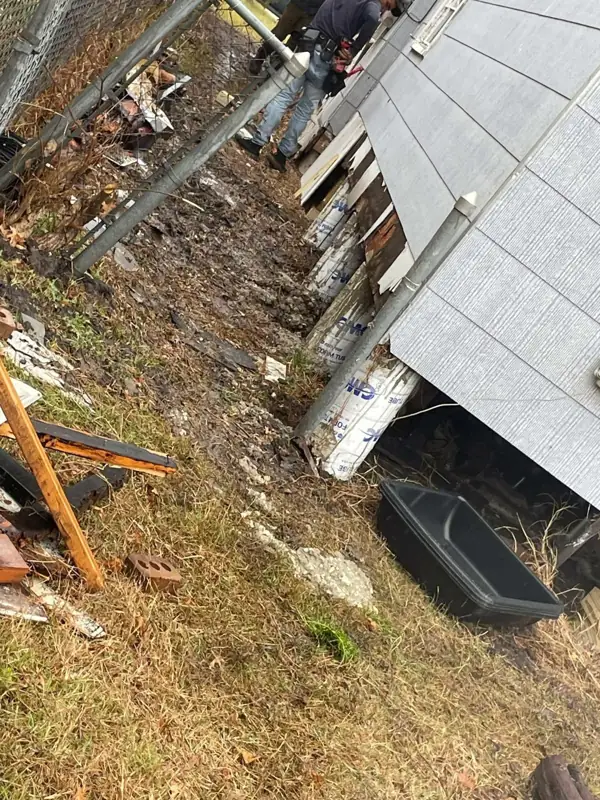
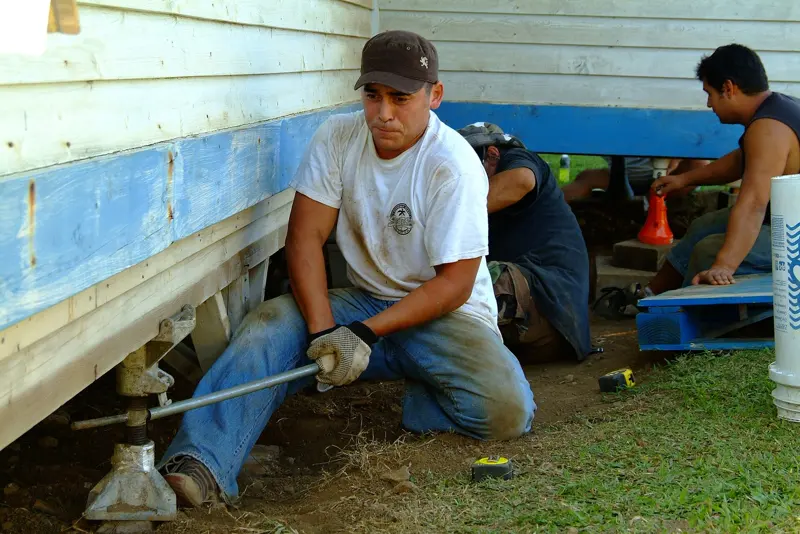
On a raised floor, most of the work happens out of sight. We reset or replace failed supports on proper footings, use steel shims where wood has crushed, and sister damaged joists instead of tearing out floors. Lifting is slow and staged so plaster, tile and old window glass are not forced faster than they can tolerate.
Our pier and beam repair and house leveling pages describe those methods.
Water control comes alongside. Roof runoff, downspouts that empty against the wall and beds that hold water against stone all keep the clay swinging between wet and dry. Gentle regrading and extended discharge points help the soil stay at a steadier moisture level, which is the goal on expansive clay. See our drainage correction service for how we plan that.
Before you buy, ask whether the house is a local landmark, a contributing building in the National Register district, or neither, because each answer changes what review applies. Ask for any past leveling records and look under the house if it is raised. A floor elevation survey before closing gives you a baseline for later.
If a restoration is planned, check the foundation before refinishing floors or replastering, since leveling afterward can crack new work. Our list of foundation warning signs in Comal County is a useful checklist for a first walk-through.
National Park Service, National Register record for the Gruene Historic District and Listing a Property (listing and ownership). City of New Braunfels, Historic Preservation Resources (Certificate of Alteration) and Historic Districts. Gruene, Texas, History. USDA NRCS Web Soil Survey (Purves and Anhalt clay, depth to bedrock, linear extensibility). U.S. Census Bureau Geocoder (Gruene inside New Braunfels city limits).

Why trust us
Crews work both sides of I-35, from Hill Country limestone to the clay toward Seguin.
Written scopes list pier count and method, so quotes line up side by side.
Our New Braunfels guides cite the EAA, NBU and state agencies.
A quote request is not a contract.
Seasonal guide
Flash flooding and saturated soil can trigger sudden settlement.
Drought dries clay; water the perimeter evenly during long dry spells.
Tropical moisture can return quickly; check gutters before it does.
Mild weather is a practical time to book work.
Ready for a quote? Three quick steps, or call now.
Questions
Only if the property is a local landmark or in a local historic district. New Braunfels lists foundation work among the projects that need a Certificate of Alteration.
No. The National Park Service says listing places no restrictions on private owners unless federal money, licenses or permits are involved.
The mapped clays here are highly expansive and sit on shallow limestone, so they shrink in dry spells and swell when wet while the rock below stays put.
Sometimes, but many older homes are better stabilized and raised gradually. Forcing them flat in one visit can crack plaster and bind doors.
Talk to a foundation crew that works New Braunfels ground.
Free written quote
Tell us the service, the street and a good time to reach you.