- 35.7 inYearly rain, New Braunfels
- CfaHumid subtropical climate
- May & OctWettest months
01How slab repair is done
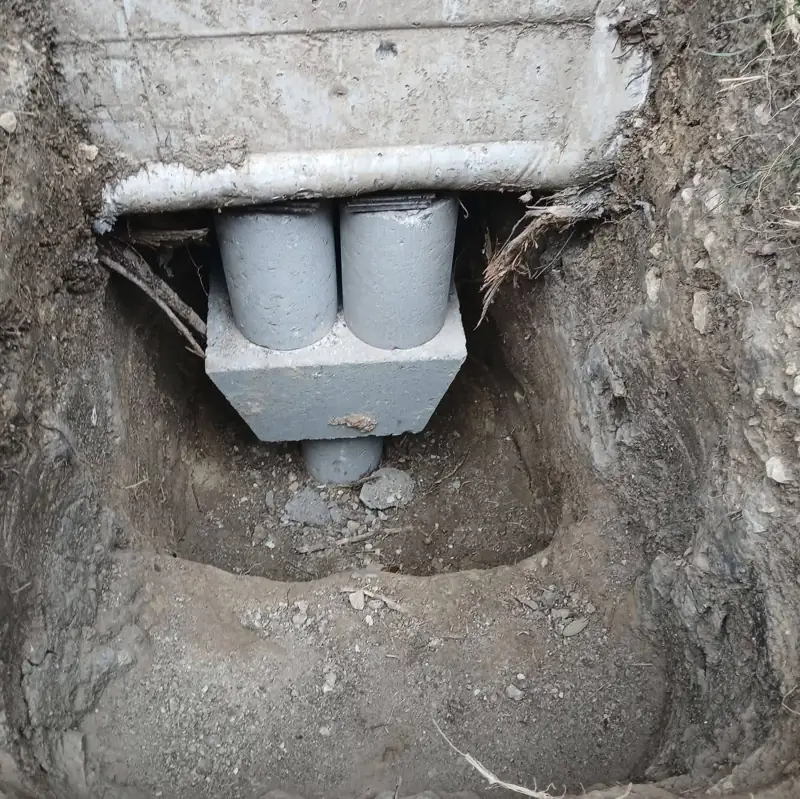
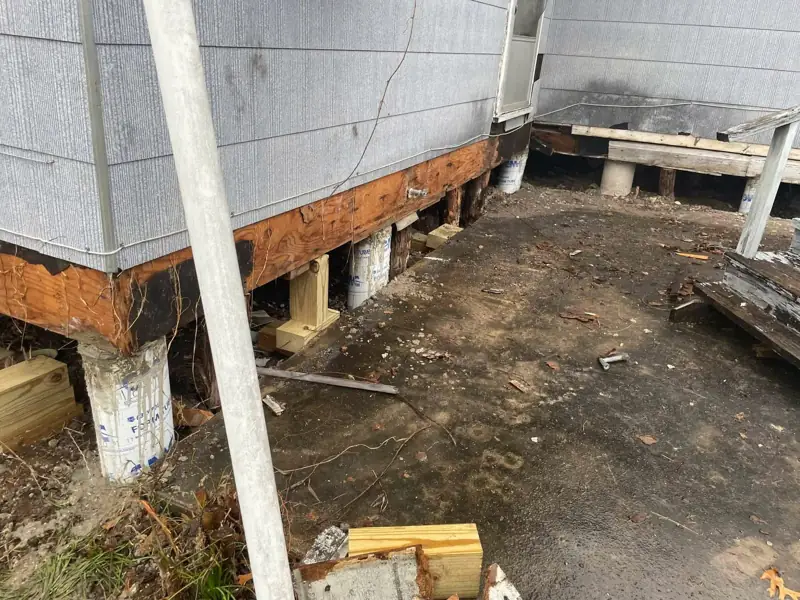
The usual fix is to install steel or concrete piers under the beams of the slab, then raise the low areas back toward level with hydraulic jacks. Pressed concrete piers are common in the San Antonio area; steel piers are driven deeper and are often chosen where clay is thick or loads are heavy.
On rock-heavy lots on the Hill Country side of town, crews may hit refusal at shallow depth, which changes the pier plan.
After lifting, voids under the slab may be filled and plumbing can be pressure tested, since lifting a slab can stress old drain lines.
02Signs the slab needs attention
Diagonal cracks running from door corners, a step crack in exterior brick, gaps between the slab and baseboards and a floor that feels like it slopes when you walk across it are all common. A single hairline crack in the garage slab is usually shrinkage, not failure. If you are not sure, start with a foundation inspection.
03Questions to ask
Ask how many piers are planned and why, how deep they are expected to go, and whether the warranty transfers if you sell. Compare the scope with our guide to warning signs in Comal County homes so you know which symptoms the plan is meant to fix.
04Piers on rock vs piers in clay
On the Hill Country side, piers may hit rock at shallow depth; on the clay side they often go deeper to reach stable soil. Ask how depth is decided on your lot and how it is documented. Steel and pressed concrete piers are both used locally.
Cost factors
What moves the price on a slab job
| Factor | Why it matters |
|---|---|
| Number of piers | Each pier adds labor and material. |
| Rock depth | Shallow limestone changes pier type. |
| Access | Patios and landscaping slow the dig. |
| Plumbing | A leak test may be needed first. |
Comal and Guadalupe counties
How this fits local homes
Expansive clay east of I-35
On the prairie side toward Seguin and Schertz, dark clay swells when wet and shrinks in drought, moving slab edges and corners.
Rock and fill to the west
Toward Canyon Lake and Bulverde, slabs often rest on thin soil over limestone, and movement usually comes from fill pads.
Pressed or helical piers
Piers are installed under the beam to rock or stable soil, then the slab is lifted toward level where safe.
Drainage with every repair
Clay next to piers still moves with water, so downspouts and grading are part of the plan.
Decision help
Is this the right fix for your house?
One corner dropping with growing cracks
Piers under that corner are the usual answer.
The whole house moves with the seasons
Steady soil moisture and drainage may be the first step.
Cracked tile in a straight line
Check whether the slab below has a step; if not, it may be cosmetic.
New home with cracks
Check the builder warranty before hiring.
What to expect
How the job usually goes
- 1
Elevation survey
The crew maps floor heights to find low areas.
- 2
Pier layout
Pier locations are planned under the beams that need support.
- 3
Install piers
Piers are pressed or screwed to rock or stable soil.
- 4
Lift and lock
The slab is raised toward level and locked in place.
- 5
Plumbing test and cleanup
A plumbing test checks lines under the slab, and soil is backfilled.
Avoid these
Common mistakes
- Too few piers Wide spacing can leave sections unsupported.
- Skipping the plumbing test Lifting can stress old lines.
- Ignoring drainage Clay keeps moving next to the piers.
- Lifting too fast Fast lifts crack drywall and tile.
Cost drivers
What changes the price here
- Rock or clay On the Hill Country side west of I-35, piers may stop at shallow limestone; on the prairie clay toward Seguin they often go deeper, which adds cost.
- Number of piers The elevation survey sets how many piers are needed along the moving edge.
- Interior piers Piers under the house need tunnels or slab cuts, which cost more than exterior piers.
- Plumbing tests A before-and-after plumbing test adds a small cost but protects under-slab lines.
Photos