01What crews replace
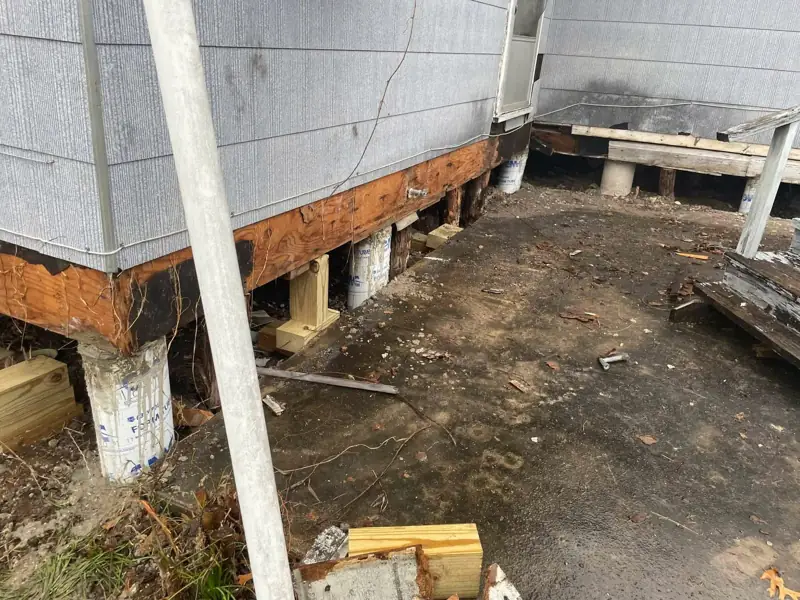
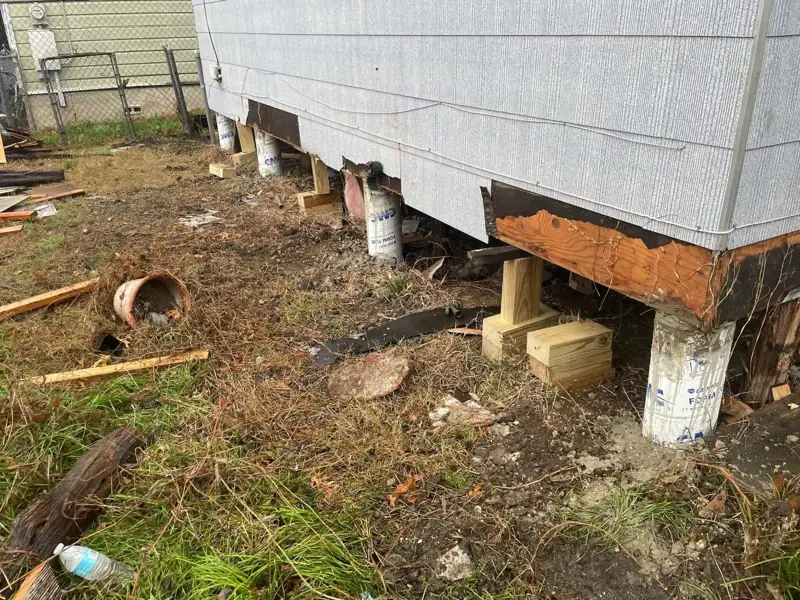
Repair can mean resetting or adding concrete pier pads, swapping crushed shims for steel ones, sistering or replacing a sagging beam, or rebuilding a sill that has rotted where it touches damp masonry. The photos on this page show that kind of work: new pads poured, new beams set, and the house brought back down onto solid support.
02Why raised homes sag
Moisture is the usual cause. A crawl space with poor airflow or water pooling after rain will soften wood and undermine pads. In clay areas on the prairie side the pads themselves can rise and fall with the seasons. Pairing a structural fix with crawl space repair protects the new wood.
03Before you sign
Ask whether the crew will open the skirting and photograph what they find, and whether replaced wood is treated. For whole-house sloping, house leveling may be part of the same job.
04Older homes near the rivers
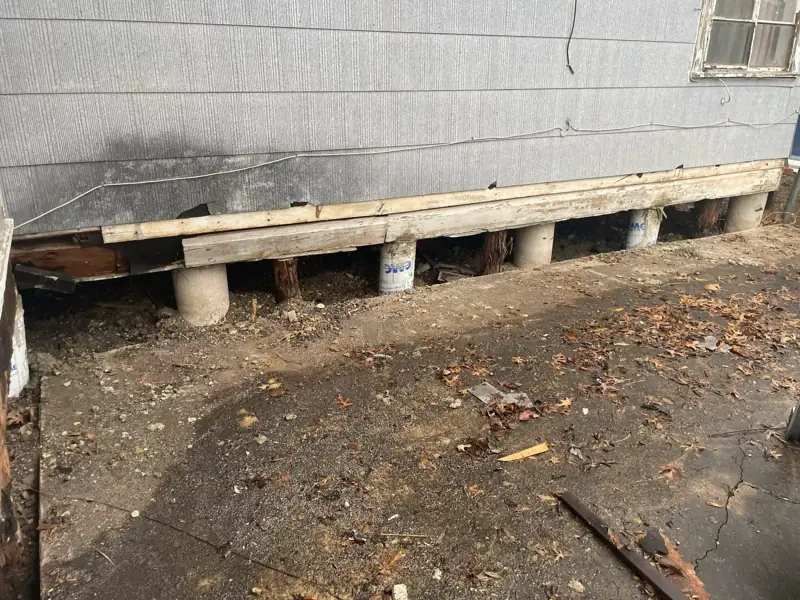
Pier-and-beam houses near the historic core and rivers face damp crawl spaces. Repairs include new piers, steel shims, sistered joists and moisture control.
Repair steps
How a pier and beam repair moves along
- 1
Crawl check
The crew measures and photographs piers and beams.
- 2
Shim or replace
Weak shims swapped, bad piers rebuilt.
- 3
Beam repair
Rotted sections sistered or replaced.
- 4
Floor readings
Before and after numbers compared.
Comal and Guadalupe counties
How this fits local homes
Older homes near the rivers
Older houses near downtown New Braunfels, Gruene, Seguin and Marion often stand on pier-and-beam foundations.
Damp crawl spaces
Humidity near the Comal and Guadalupe rivers keeps crawl spaces damp and rots wood.
Sinking piers
Old piers on shallow footings sink in clay or lean.
Beam and sill repair
Rotted sills and sagging beams are sistered or replaced.
Around New Braunfels
How this plays out locally
Sagging floors between piers. Wide pier spacing in older homes lets beams sag. Adding piers between existing ones stiffens the floor.
Rotted sills on a damp side. Moisture on the side with poor drainage rots sills first; they are replaced before shimming.
Uneven floors after a wet spring. Heavy rain can soften soil under shallow piers on the clay side, so floors dip until piers are reset.
Decision help
Is this the right fix for your house?
Floors sagging in the middle
Add supports under the center beam.
Bouncy floors
Sister weak joists.
Whole house slopes
Survey, then new piers.
Musty smell
Fix moisture first.
Local scenarios
What this looks like in the New Braunfels area
A historic home near downtown. Many older New Braunfels homes stand on piers over crawl spaces. Repairs usually mix new piers, steel shims and wood replacement.
What to expect
How the job usually goes
- 1
Crawl inspection
Piers, beams, joists and sills are checked.
- 2
Moisture plan
Drainage, vents or barrier.
- 3
Replace piers
New piers on footings.
- 4
Repair wood
Sister or replace.
- 5
Shim and level
Steel shims bring floors close to level.
Avoid these
Common mistakes
Wood shims that rot
Steel shims last longer.
Ignoring moisture
Damp soil sinks piers.
Jacking too fast
Cracks plaster.
Leaving rotted sills
Rot spreads.
Cost drivers
What changes the price here
- Crawl-space height Low crawl spaces in older New Braunfels homes slow the crew down.
- Wood repair Rotted sills or beams add materials and labor beyond shimming.
- New piers Adding piers between existing ones costs more than resetting.
- Moisture control A vapor barrier or vents add to the job but protect the wood.
Before you sign
Questions to ask the crew
- Will you replace rotted sills?
- Ask for photos before and after.
- What shims do you use?
- Steel shims hold up better than wood.