
Spring storms
Flash flooding and saturated soil can trigger sudden settlement.
Dry season care
Short answer: under New Braunfels Utilities (NBU) Stage 2 rules, which took effect on August 10, 2026, you may still water your foundation for up to two hours on any day, but only during allowed watering hours and only with a handheld hose or a soaker or drip line within 24 inches of the foundation that does not spray. Check NBU's current stage before you water, because the stage can change.
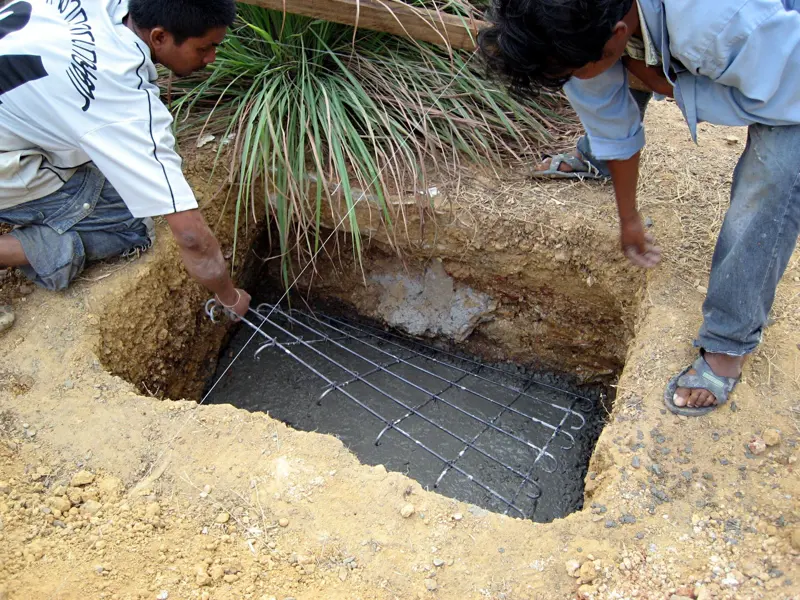
Much of New Braunfels and the rest of Comal County is built on clay soils, and some areas also have shallow limestone. Clay shrinks as it dries and swells when it gets wet. In a long dry spell, the soil under the edge of a slab dries faster than the soil under the middle.
The edge loses support, and cracks, sticking doors and sloping floors can follow.
Keeping the soil near your foundation at a steady moisture level is one of the simplest ways to reduce that movement. The goal is not to make the ground wet. It is to keep it from swinging between very dry and very wet.
NBU sets water conservation stages based on the Edwards Aquifer level and the flow at Comal Springs. According to NBU, Stage 1 begins when the aquifer reaches 660 feet above mean sea level or Comal Springs flow drops to 225 cubic feet per second. Stage 2 begins at 650 feet or 200 cubic feet per second.
Stage 3 begins at 640 feet or 150 cubic feet per second.
Because these numbers move with rainfall and pumping, the stage can change during the year. NBU posts the current stage on its website, and that page is the one to check before you change your watering routine.
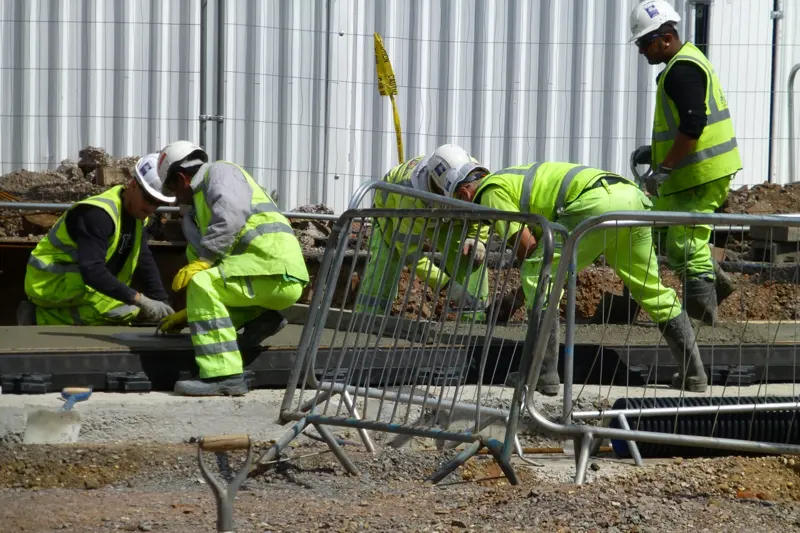
Under Stage 2, NBU allows foundation watering for up to two hours on any day. It must happen during the allowed watering times, which are before 10 a.m. and after 8 p.m. You may use a handheld hose, or a soaker hose or drip irrigation system placed within 24 inches of the foundation, as long as it does not spray water into the air.
Sprinkler watering of lawns is more limited. In Stage 2, NBU allows sprinklers once a week on a day set by the last digit of your street address. Foundation soaker lines are treated separately from lawn sprinklers, which is why the method you use matters.
Rules in later stages can be stricter, so read NBU's current stage page if the stage changes.
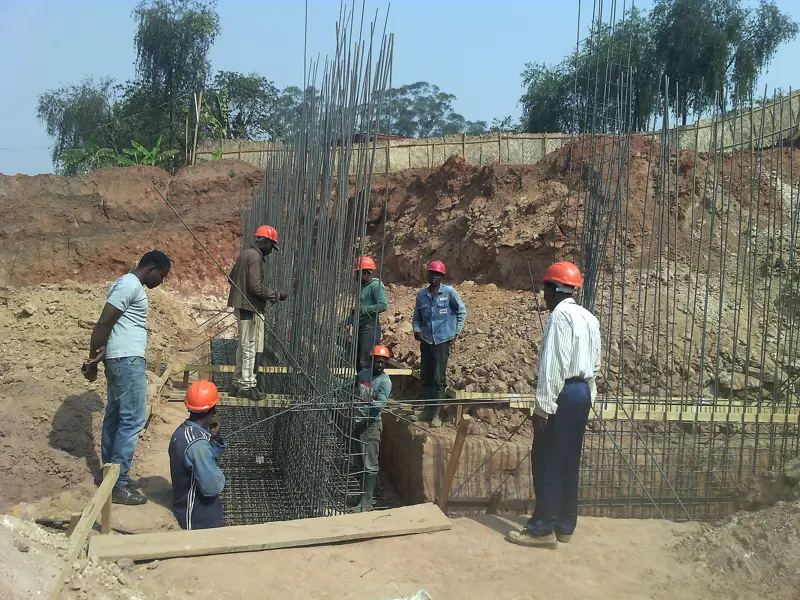
A soaker hose is the most common choice. Lay it on the soil, not against the wall, so water soaks in around the edge of the slab instead of running down the face of the foundation. A spot several inches from the slab is typical, and NBU's rule allows up to 24 inches.
Cover it lightly with mulch to cut evaporation and keep it in place.
Water evenly around the whole house. A common mistake is to water only the side that looks dry or only the front yard. Uneven watering can cause the same uneven movement you are trying to prevent. A simple hose timer helps you stay within the allowed hours and the two-hour limit.
Watch how the soil responds. If water puddles or runs off, you are watering too fast or too long. If a gap opens between the soil and the slab, the soil is drying out. Closing that gap slowly is better than flooding it.
Watering is only one half of moisture control. Gutters that overflow, downspouts that dump water at the corner of the house, and soil that slopes toward the slab can all add too much water in storms. When heavy rain follows a long drought, the clay can swell quickly on one side.
Check that downspouts carry water several feet away and that the ground slopes away from the house. Our drainage correction work covers grading, downspout lines and surface drains.
If cracks keep growing, doors keep sticking, or floors are clearly out of level, the foundation may have moved more than watering can fix. Watering helps prevent movement, but it does not lift a slab back to level.
A foundation inspection records floor elevations and crack patterns so you can see whether the house is still moving. Where it is, slab foundation repair with piers can support the slab on firmer ground below.
Here is a simple routine that stays inside the Stage 2 rules. Pick one or two mornings a week before 10 a.m., or evenings after 8 p.m. Run the soaker hose around the house with a timer, staying under the two-hour limit. Check the soil a day later by pushing a screwdriver into it near the slab.
If it slides in with mild effort, the moisture is about right. If it will not go in, add a little more time next session. If the soil is muddy, cut back.
Change the routine with the weather. After a good rain, skip a session or two. During long hot spells with no rain, you may need to water on more days, still within the hours and the two-hour limit.
Large trees near the house pull a lot of water from the soil, and in a drought their roots reach under slabs looking for moisture. That can dry one side of a house faster than the rest. Watering along that side helps, and in some cases a root barrier is worth considering.
Flower beds against the foundation can hold water in some spots and shed it in others. Edging that traps water against the slab, or beds that are much higher than the surrounding yard, can both cause uneven moisture. Keep beds sloped away from the house and avoid piling soil up the side of the slab.
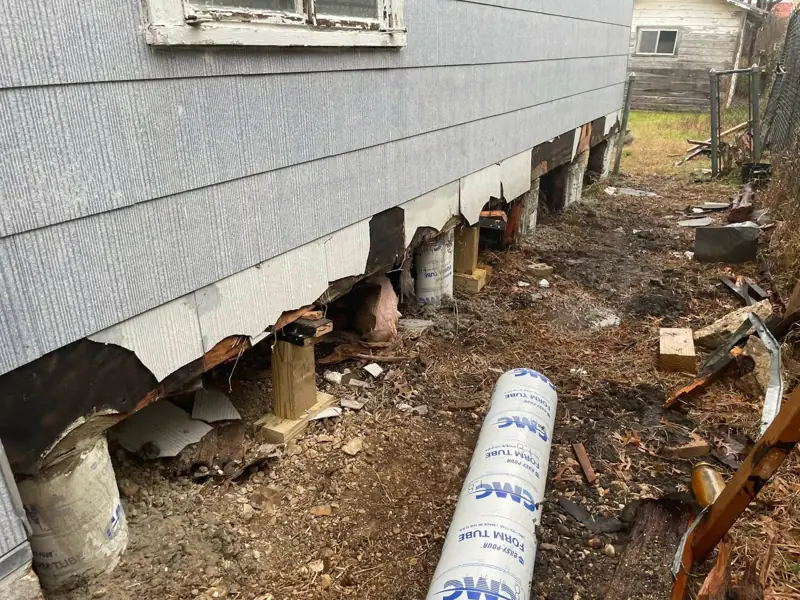
Older homes in New Braunfels with a crawl space react to drought too, but in a different way. The piers rest on soil that can shrink, and the floor may dip in spots as it does. Watering around the perimeter still helps, and it is worth looking under the house for standing water, leaking pipes or shims that have worked loose.
Our pier and beam repair page covers what that work looks like.
Write down the date of each change you notice, such as a door that sticks or a new crack. Add a photo with a tape measure for scale. When the weather changes, compare. Movement that comes and goes with the seasons tells a different story than movement that keeps getting worse, and a good record helps you make the right call.
Newer subdivisions around New Braunfels often have bare yards and young landscaping. The soil around a new slab can dry quickly in the first summers before grass and shade fill in. Starting a soaker routine early, within NBU's rules, and confirming the builder's grading sends water away from the house both help the slab settle evenly.
New Braunfels Utilities: current conservation stage and NBU moves to Stage 2.
Why trust us
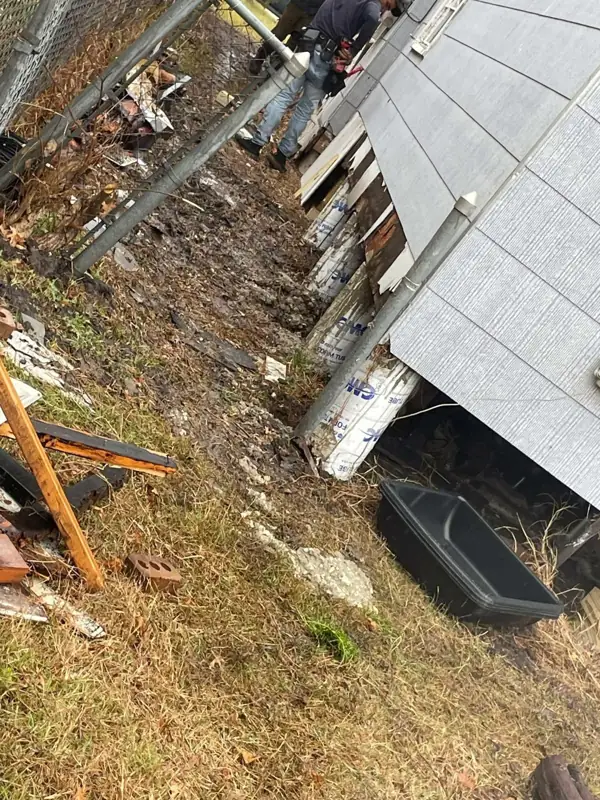
Crews work both sides of I-35, from Hill Country limestone to the clay toward Seguin.
A clear written scope, with method, supports and warranty, before anyone lifts your home.
Every guide here is read by a repair specialist.
A request starts a conversation, not a contract.
Seasonal guide
Flash flooding and saturated soil can trigger sudden settlement.
Drought dries clay; water the perimeter evenly during long dry spells.
Tropical moisture can return quickly; check gutters before it does.
Mild weather is a practical time to book work.
Questions
Yes. NBU allows up to two hours on any day during the allowed watering hours, using a handheld hose or a soaker or drip line within 24 inches of the foundation that does not spray.
Under Stage 2, before 10 a.m. and after 8 p.m. Check NBU's current stage page for any changes.
No. NBU lists foundation watering by handheld hose, soaker or drip separately from once-a-week sprinkler watering.
No. It helps reduce future movement. A house that has already moved needs an inspection and possibly repair.
Talk to a foundation crew that works New Braunfels ground.
Ready when you are
Pick the service, tell us your timing, and add your contact details. A local pro follows up to confirm the details.