Rock vs clay
Piers stop at shallow limestone on some west-side lots and run deeper in eastern clay.
Shops, offices and multifamily buildings
New Braunfels has grown quickly, and older retail, office and church buildings sit on the same moving clay and limestone as the houses around them. Commercial work follows the same principles at a larger scale.
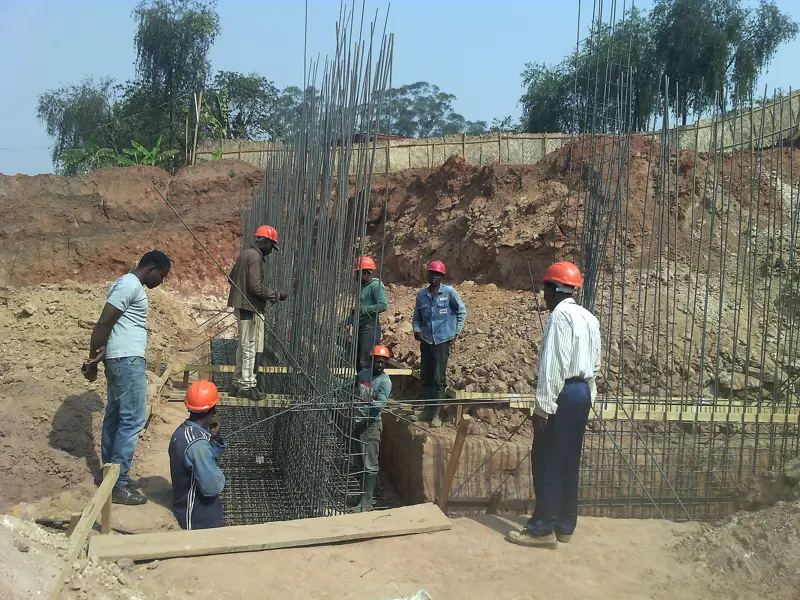
Larger slabs and heavier loads usually mean engineered pier plans, more piers and closer coordination with tenants so the building can stay open. Many owners need a structural engineer's sealed plan before work starts, and city permits may apply.
Settled slab sections in strip centers, cracked masonry on older downtown buildings, and drainage problems around parking lots are common. Lots that shed water toward the building may need drainage correction.
Begin with an evaluation by an engineer or a contractor that handles commercial work, then compare scopes. For smaller buildings, our house leveling page explains the basics.
Pricing
Piers stop at shallow limestone on some west-side lots and run deeper in eastern clay.
Every pier adds materials and labor; ask for a layout drawing.
Two-story and pier and beam homes need different equipment.
Low lots near the rivers may need grading or drains alongside repair.
Often requested for sales or insurance; adds a fee but an independent view.
Ground conditions
How the work usually goes
Elevations, crack patterns, drainage and soil type are checked to find why the house moved.
The contractor writes up pier layout, depth, drainage fixes and warranty terms.
Piers or new supports go in and the home is raised toward level as far as framing allows.
Final readings are recorded so future movement can be compared against them.
Questions
Often, with phased work. Ask contractors how they schedule around operations.
Many do. Your contractor should know local requirements.
Talk to a foundation crew that works New Braunfels ground.
Takes under a minute
Talk to a foundation crew that works New Braunfels ground.